One of the most beautiful things about AfroGospel music is how far it has travelled.
What started as a niche expression of faith has grown into a movement that reaches people across different countries, cultures, and backgrounds. Today, AfroGospel is showing up in places many people never expected it to.
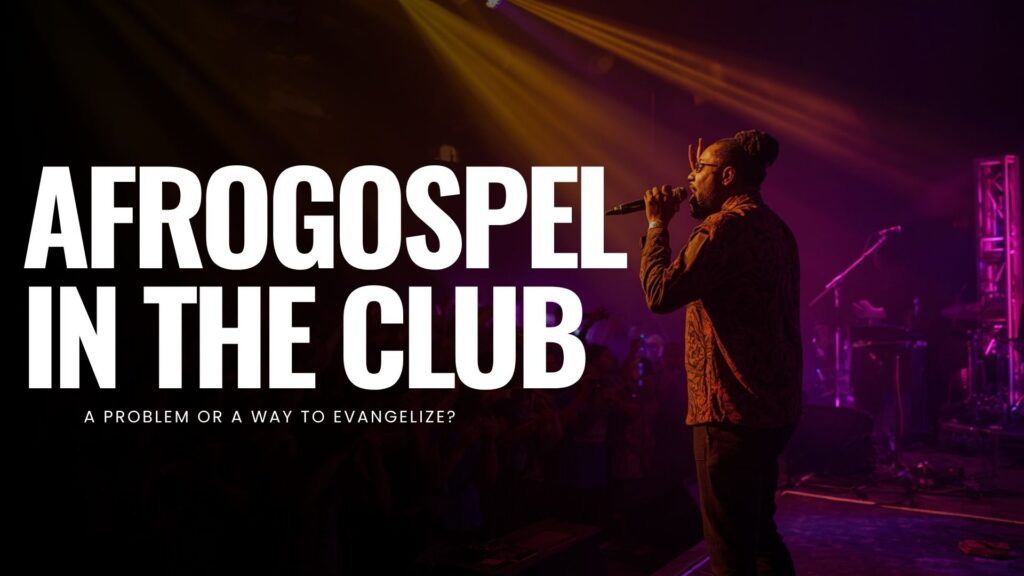
And lately, one of those places has been the club.

Now, we’re not talking about Christian DJs playing AfroGospel at Christian parties. We’re talking about actual secular spaces playing songs like “No Turning Back II” during the height of their popularity.
So how does this happen? And should we be worried about it.

Here’s the honest answer: AfroGospel was always going to end up in these spaces eventually. Not because gospel artists were targeting clubs but because of what AfroGospel actually sounds like.
AfroGospel, by its very nature, blends African rhythms, Afrobeats elements, and contemporary production with gospel lyrics. The result is music that sounds like what’s already playing in secular spaces just with a different message underneath.
So when a song like “No Turning Back II” goes viral, it doesn’t stay in one lane. It travels everywhere. Into playlists. Into reels. Into clubs. People are vibing and dancing to the sound. The message may not even register.
But here’s where the conversation gets important.
The problem isn’t AfroGospel ending up in clubs. If a genuinely anointed, uncompromised gospel song reaches someone in a secular space and God uses it to touch their heart, that’s not a failure. That’s actually God doing what only God can do.
The real concern is what happens when gospel artists start making music WITH the club in mind.
When the desire for a song to trend in secular spaces begins to influence the lyrics, the message, and the spiritual weight of the music, that’s where the compromise happens. That’s where gospel music loses the very thing that makes it gospel music.
Gospel artists need to be clear about something: their primary audience is God’s people. Not the world.
That doesn’t mean the world can’t encounter the music. It doesn’t mean a song can’t travel beyond church walls. But it does mean the standard of the music — its spiritual integrity, its truthfulness, its anointing — should never be negotiated in pursuit of mainstream appeal.
Make the music right. Keep the standard. Don’t water down the message chasing spaces that weren’t your target in the first place.
If the music ends up in a club? Let God handle what He wants to do with it. He has never needed our permission to reach people in unexpected places.
But that outcome should be a byproduct of faithfulness and not the goal of compromise.
So Is It a Problem?
Not inherently. AfroGospel in the club is only a problem when it reflects a gospel artist who has lost sight of who they’re making music for and why.
So keep the standard. The rest will take care of itself.